Asbestos kills around 5,000 people per year in the UK. In 2023, 2,218 people died from mesothelioma alone — a cancer caused almost exclusively by asbestos exposure. There is no safe level of exposure, no cure for mesothelioma, and symptoms can take 20 to 50 years to appear.
If you are doing any work that might disturb asbestos, the minimum respiratory protection is an FFP3 respirator. Not FFP2. Not a paper dust mask. FFP3, with a proper face-fit. This is not a recommendation — it is UK law.
This guide covers the legal requirements under the Control of Asbestos Regulations 2012, where asbestos is commonly found in UK homes, which masks meet the legal standard, and when you need to call a licensed professional instead of doing it yourself.
Disclaimer: This guide provides general information based on UK regulations and HSE guidance. It is not a substitute for professional asbestos advice. If in doubt, always consult a licensed asbestos professional before starting any work.
The Law: Control of Asbestos Regulations 2012
The Control of Asbestos Regulations 2012 (CAR 2012) is the primary UK legislation governing asbestos work. It applies to all workplaces and imposes strict duties on employers, employees, and anyone who might disturb asbestos-containing materials (ACMs).
The key points relevant to respiratory protection:
- Minimum RPE for asbestos is APF 20 — that means FFP3 disposable masks or reusable respirators with P3 filters
- FFP2 is not acceptable — it only provides APF 10, which is half the protection required
- Face-fit testing is legally required for all tight-fitting RPE used in workplace settings
- Facial hair that breaks the seal makes the mask useless — the HSE is unambiguous on this point
- RPE must be CE marked and meet EN 149:2001+A1:2009 (disposable) or EN 140/EN 143 (reusable)
The Three Categories of Asbestos Work
CAR 2012 divides asbestos work into three categories, each with different requirements:
| Category | Examples | Requirements |
|---|---|---|
| Licensed work | Removing sprayed coatings, pipe lagging, insulating board | HSE licence required. Must use licensed contractor. Notifiable to HSE 14 days in advance. |
| Notifiable Non-Licensed Work (NNLW) | Removing substantially damaged cement sheets, large-scale Artex removal | No licence needed, but must notify HSE. Medical surveillance required. Short-duration work only. |
| Non-licensed work | Drilling a few holes in cement sheets, removing undamaged floor tiles, minor maintenance | No notification required. Still requires training, RPE, and proper procedures. |
Important: Even non-licensed work still requires FFP3 protection, proper training, and correct procedures. The category only affects licensing, notification, and medical surveillance — not the standard of respiratory protection.
Where Is Asbestos in Your Home?
Around half of UK buildings constructed before 2000 contain asbestos. It was completely banned on 24 November 1999, but materials installed before that date remain in millions of homes. If your property was built or significantly refurbished before 2000, assume asbestos is present until proven otherwise.
| Location | Material | Risk Level When Disturbed |
|---|---|---|
| Ceilings | Artex textured coating (pre-1999) | High — sanding or scraping releases fibres |
| Floor tiles | Vinyl floor tiles and backing | Moderate — breaking or sanding releases fibres |
| Garage/shed roofs | Corrugated cement sheets | Moderate to high — cutting or breaking is dangerous |
| Pipe lagging | Insulation around hot water pipes | Very high — often friable amosite or crocidolite |
| Soffit boards | Cement boards under roof edges | Moderate — drilling or cutting releases fibres |
| Boiler flues | Cement or insulating board | High — often disturbed during boiler replacement |
| Behind fuse boxes | Insulating board | High — often overlooked during electrical work |
| Water tanks | Cement or insulating material | Moderate — often in loft spaces |
| Window sills (interior) | Asbestos board | Low if undisturbed, high if cut or drilled |
The three main types of asbestos found in UK buildings are chrysotile (white, accounting for about 90% of asbestos-containing materials), amosite (brown), and crocidolite (blue, the most dangerous). You cannot identify asbestos type by looking at it — laboratory testing is required.
Which Masks Meet the Legal Standard?
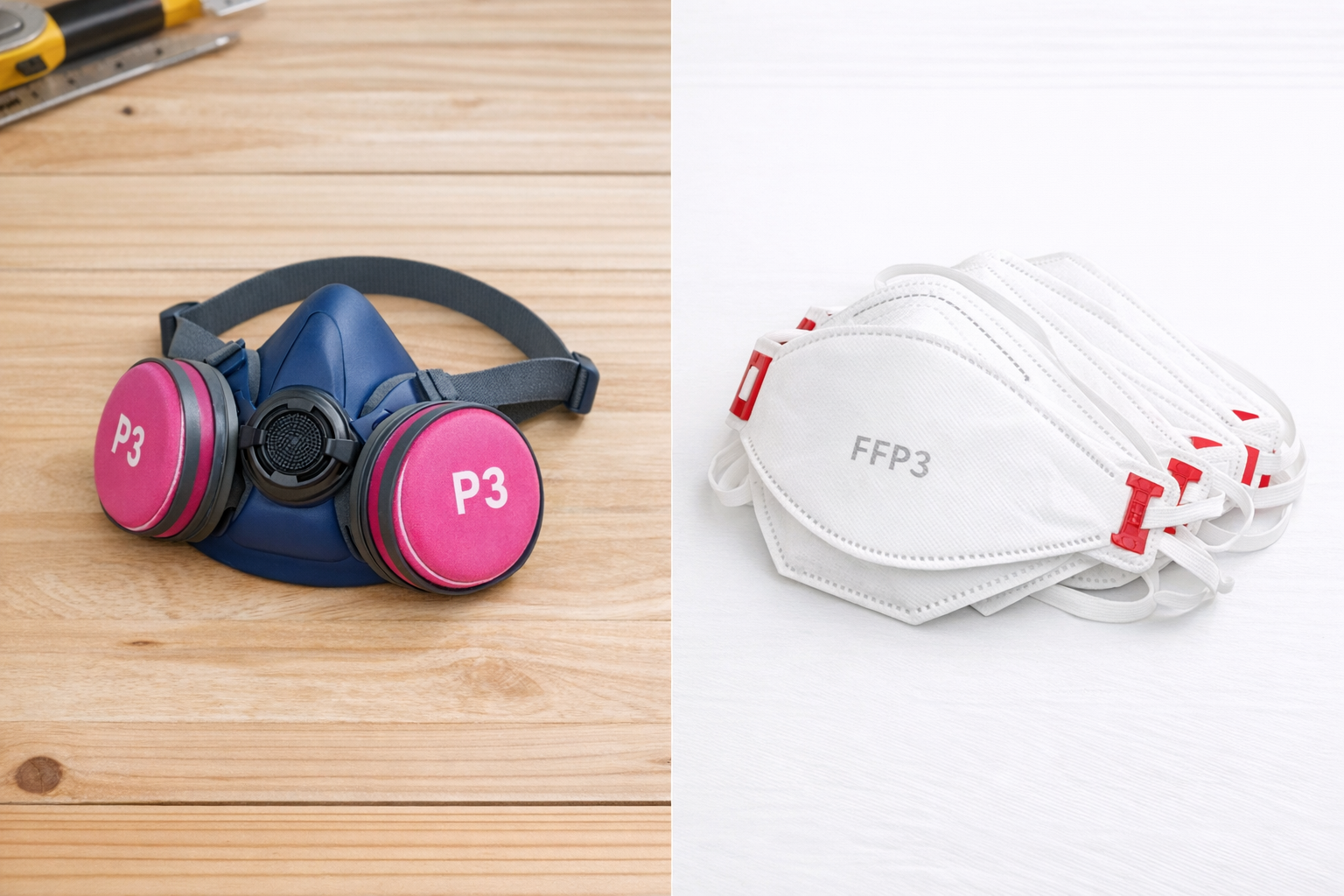
You have two main options: disposable FFP3 masks (single-use) and reusable half-mask respirators with P3 filters. Both provide the legally required APF 20. Full-face respirators provide APF 40 for higher-risk situations.
FFP3 Disposable Masks (APF 20)
Disposable FFP3 masks are the simplest option. Use once, dispose of safely. Best for short-duration tasks.
| Mask | From (per unit) | Suppliers | Notes |
|---|---|---|---|
| 3M Aura 9332+ | £0.10 | 19 | Valved, tri-panel. The UK's most popular FFP3. Excellent fit for most face shapes. |
| 3M Aura 9330+ | £0.40 | 10 | Unvalved version. Better for protecting others around you. |
| 3M Aura 1863+ | £0.19 | 6 | Medical/surgical FFP3. Fluid-resistant and individually wrapped. |
| Honeywell SuperOne 3207 | £3.00 | Available at Toolstation | Cup-shaped, readily available from trade counters. |
| Easimask FSM18 | £1.66 | Available in bulk | Budget cup-shaped option. Good value in large packs (120+). |
All FFP3 masks meet EN 149:2001+A1:2009 requiring 99% minimum filtration. Prices are per-unit and updated daily. Compare all FFP3 prices here.
Reusable Half-Mask Respirators with P3 Filters (APF 20)
Reusable half-masks are more economical for regular or prolonged work. The mask body lasts for years; you only replace the filters. They also tend to provide a more consistent seal than disposables.
| Respirator | Price Range | Suppliers | Notes |
|---|---|---|---|
| JSP Force 8 with P3 Filters | ~£10 – £28 | 13 | UK favourite. PressToCheck system for easy seal verification. Excellent value. |
| GVS Elipse SPR501 P3 | ~£27 – £30 | 6 | Extremely compact and lightweight. Low breathing resistance. Great for extended wear. |
Replacement filters: JSP PressToCheck P3 filters from £3.94/pair. 3M 6035 P3 filters from £1.49/unit.
Full-Face Respirators (APF 40)
Full-face respirators provide APF 40 — double the protection of half-masks. They also protect the eyes from fibre irritation. Consider these for NNLW or any work involving damaged or friable materials.
The 3M 6800 Full Face Respirator is the standard choice, typically £93–£119 for a single unit (from £11.91/unit in bulk from Camlab). Pair it with 3M 6035 P3 filters.
Scenario-Based Recommendations
Here is what you actually need for common UK asbestos scenarios. In every case, get the material tested first — a postal testing kit costs £20–£50 per sample from a UKAS-accredited laboratory.
Drilling a Few Holes in Artex Ceiling
Category: Non-licensed work (if confirmed asbestos, minor disturbance)
Minimum RPE: FFP3 disposable — the 3M Aura 9332+ is the go-to choice
Additional PPE: Type 5/6 disposable overalls, gloves, safety goggles
Procedure: Mist the area with water first. Use a hand drill on slow speed. Wipe the hole with a damp cloth immediately. Do not use a hammer drill or power tool.
Removing Floor Tiles (Intact)
Category: Non-licensed work (if tiles removed carefully without breaking)
Minimum RPE: FFP3 disposable
Additional PPE: Disposable overalls, gloves, goggles
Procedure: Dampen tiles and adhesive. Prise tiles up whole — do not snap or break them. Do not sand or grind adhesive. Double-bag for disposal.
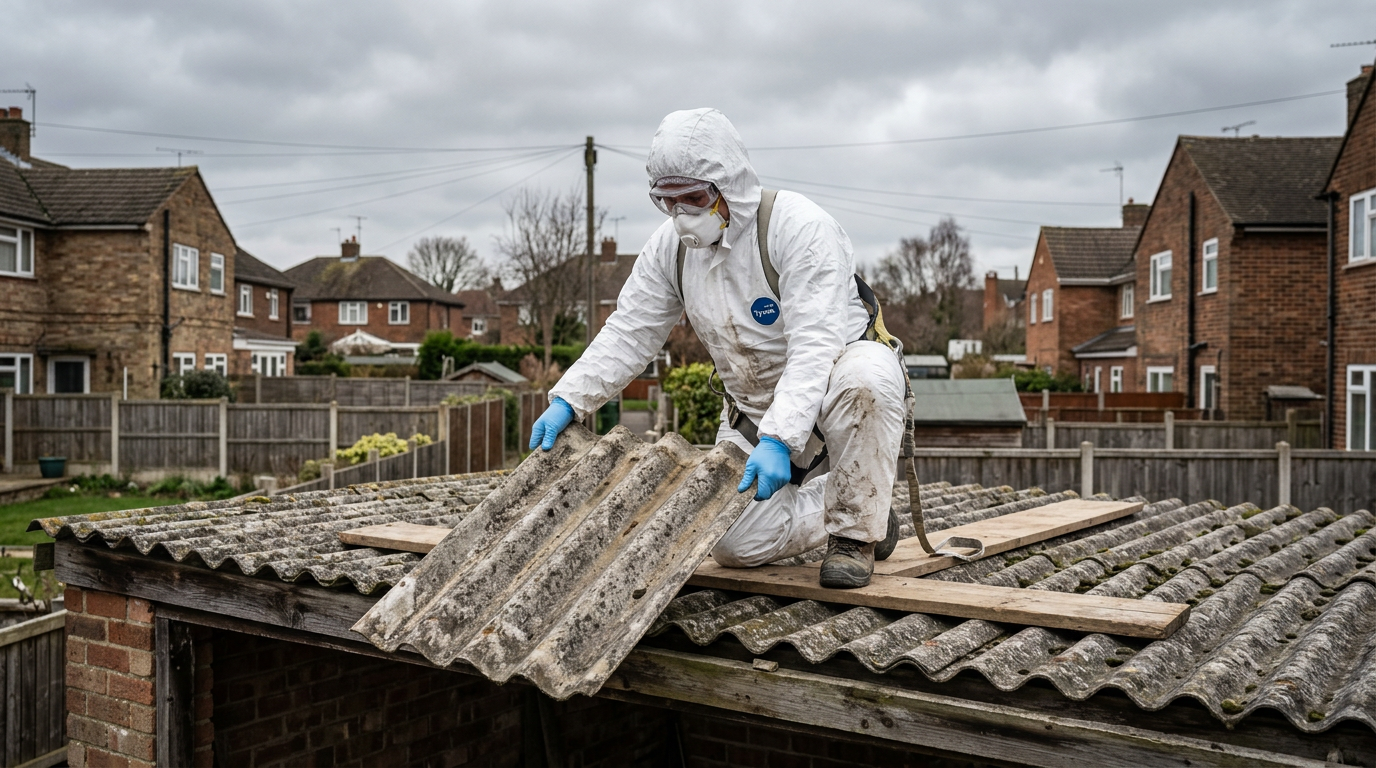
Removing a Corrugated Cement Garage Roof
Category: Non-licensed or NNLW depending on condition
Minimum RPE: FFP3 disposable or reusable half-mask with P3 filters. Consider the JSP Force 8 for this type of extended job.
Additional PPE: Type 5/6 overalls, gloves, goggles, safety boots
Procedure: If sheets are in good condition, remove whole (unbolt, do not break). Dampen before handling. Lower sheets — never drop or throw them. If sheets are damaged or crumbling, stop and call a licensed contractor.
Removing Pipe Lagging
Category: Almost always licensed work
Action: Do not attempt this yourself. Pipe lagging is often amosite or crocidolite and is frequently friable (crumbles easily). Call a licensed asbestos removal contractor.
Large-Scale Artex Removal (Whole Room or More)
Category: NNLW or licensed work depending on method and scale
Action: For anything beyond a few drill holes, call a professional. Scraping, sanding, or removing Artex from entire ceilings generates significant fibre release and is beyond the scope of safe DIY work.
Full PPE Checklist for Asbestos Work
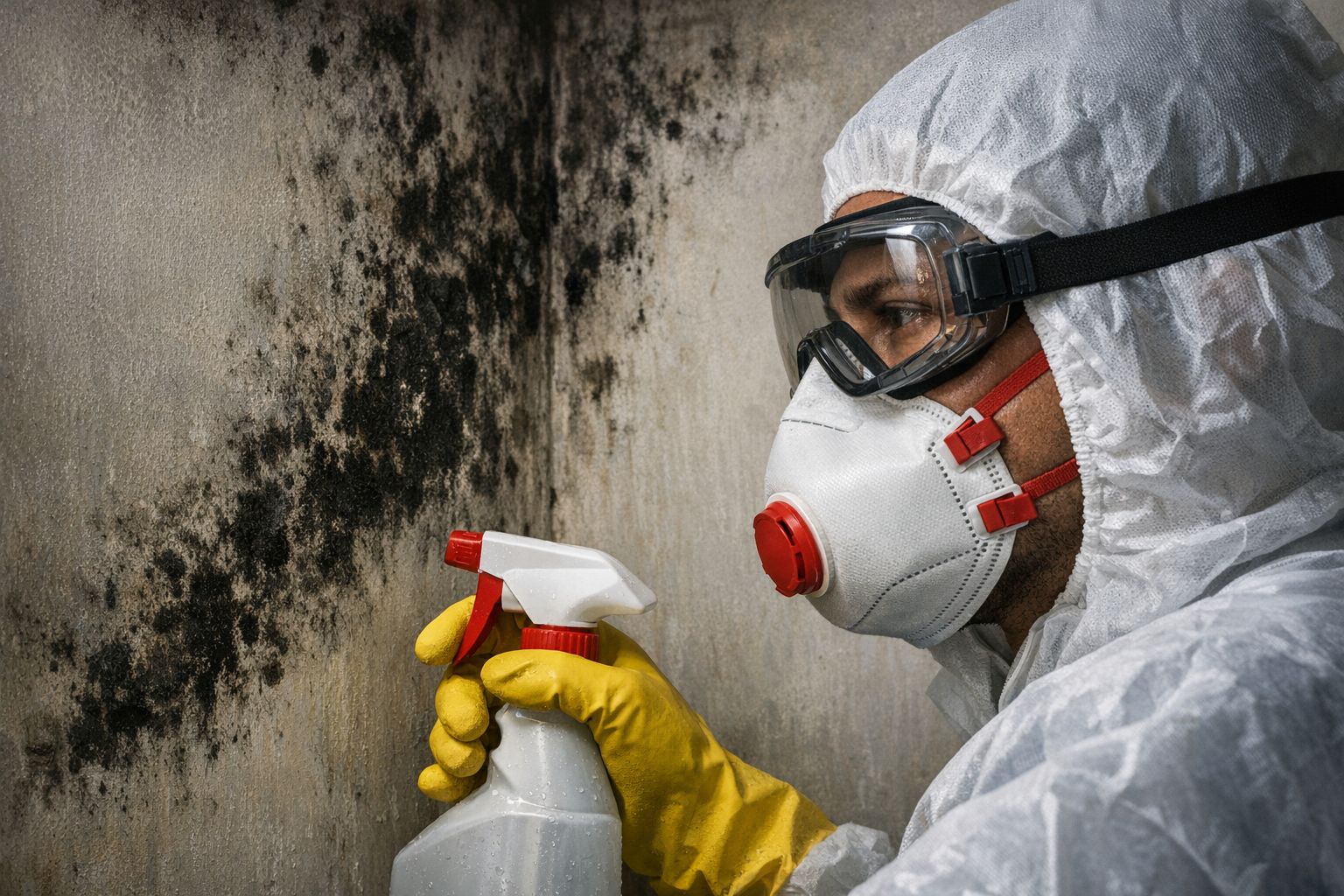
Respiratory protection alone is not enough. For any work disturbing asbestos, you need the full kit:
- FFP3 respirator (disposable) or P3 half-mask/full-face respirator (reusable) — face-fit tested
- Type 5/6 disposable overalls — with hood, elasticated cuffs and ankles. Tape the cuffs to gloves.
- Disposable gloves — single-use latex or nitrile
- Safety goggles — sealed to the face (not safety glasses). A full-face respirator covers this.
- Safety boots — ideally with disposable overshoes
- Polythene sheeting — to cover the work area and collect debris
- Plant spray bottle — to dampen materials before and during work
- Asbestos waste bags — red-labelled heavy-duty bags for double-bagging
- HEPA vacuum — Type H, suitable for asbestos. Never use a standard household vacuum.
Decontamination Procedure
What you do after the work matters as much as what you wear during it:
- While still wearing RPE, use a damp cloth to wipe down overalls
- Remove overalls by rolling them inside-out to trap fibres
- Remove gloves
- Remove goggles
- Remove the respirator last — it is the final item to come off
- Bag all disposable PPE in labelled asbestos waste bags
- Wash hands and face thoroughly
- Shower as soon as possible
Never take contaminated clothing home. Never shake out overalls. Never reuse disposable RPE that has been used for asbestos work.
Disposal Rules
Asbestos waste is classified as hazardous waste under UK law. You cannot put it in household bins, take it to a normal tip, or bury it.
- All asbestos waste must be double-bagged in heavy-duty polythene bags or wrapped in polythene sheeting
- Each bag must be labelled with the standard asbestos warning
- Waste must be taken to a licensed hazardous waste site — your local council can tell you where
- Some councils accept small amounts of asbestos cement at household waste recycling centres — check first
- For larger quantities, you may need a licensed waste carrier
- Keep records of disposal for at least two years
When to Call a Professional
You should always use a licensed asbestos removal contractor for:
- Any work on sprayed coatings, pipe lagging, or insulating board (these are always licensed work)
- Any work where the material is damaged, crumbling, or friable
- Large-scale removal of any asbestos-containing material
- Any situation where you are unsure of the asbestos type or condition
- Any work in confined spaces
- Commercial or industrial premises (duty holder obligations apply)
Licensed contractors are listed on the HSE website. Check they hold a current HSE licence and have adequate insurance. The cheapest quote is not always the safest choice.
Common Mistakes to Avoid
Based on real mistakes that come up repeatedly in DIY forums and HSE enforcement cases:
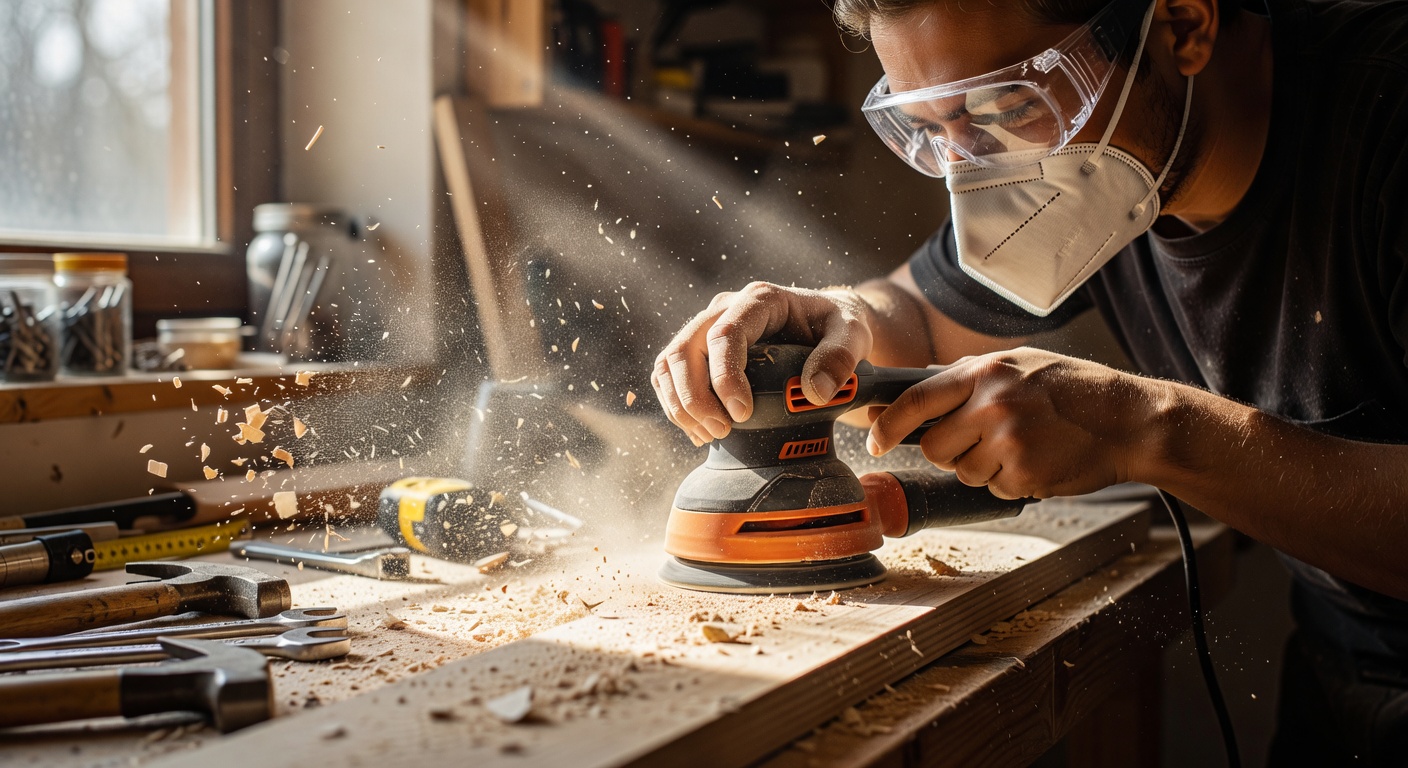
- Using a paper dust mask or FFP2 — These do not provide adequate protection for asbestos. FFP3 is the legal minimum. No exceptions.
- Wearing two masks for "double protection" — This does not work. Stacking masks compromises the seal on both. One properly fitted FFP3 is the correct approach.
- Having facial hair — Any stubble, beard, or moustache that crosses the mask seal line will break the seal and allow fibres in. The HSE guidance is clear: clean-shaven where the mask meets the face.
- Not wetting the material first — Dry asbestos releases far more fibres. Always dampen with a plant spray before and during work.
- Dry sweeping or using a normal vacuum — This disperses fibres into the air. Use damp wiping and a Type H HEPA vacuum only.
- Breaking asbestos cement sheets — Remove whole where possible. Snapping or dropping sheets releases fibre clouds.
- Skipping the face-fit test — A mask that does not seal to your face provides little protection regardless of its rating. For workplace use, face-fit testing is a legal requirement.
- Assuming newer properties are safe — Asbestos was not banned until November 1999. Properties refurbished in the 1990s may contain it. Always test if there is any doubt.
Testing Your Property
Before doing any work on a property built or refurbished before 2000, get suspect materials tested. The process is straightforward:
- Postal testing kits cost £20–£50 per sample from UKAS-accredited laboratories
- You take a small sample (carefully, wearing FFP3 and gloves, dampening the material first), seal it in the provided bag, and post it
- Results typically come back within 2–5 working days
- The lab report will confirm whether asbestos is present and identify the type (chrysotile, amosite, or crocidolite)
- If you are uncomfortable taking samples yourself, a professional asbestos surveyor will do it for you — typically £150–£300 for a domestic survey
Do not skip testing to save money. A £30 test is infinitely cheaper than the consequences of unprotected asbestos exposure.
Summary: What to Buy
For occasional short DIY tasks (drilling holes, removing a few tiles):
- 3M Aura 9332+ FFP3 — from £0.10/unit, 19 suppliers. The default choice.
- Type 5/6 disposable overalls, gloves, sealed goggles
For longer or repeated tasks (garage roof, multiple rooms):
- JSP Force 8 with P3 filters — from ~£10. More comfortable for extended work, economical long-term.
- Replacement P3 filters from £3.94/pair
- Full PPE kit as listed above
For higher-risk work where you need eye protection and APF 40:
For any licensed work, sprayed coatings, pipe lagging, or insulating board: do not buy a mask — call a licensed contractor.
Compare all FFP3 mask prices across 20+ UK suppliers →
Related guides: FFP2 vs FFP3: Which Mask Do You Actually Need? | UK's Cheapest FFP3 Masks Ranked | How to Spot Fake FFP2 and FFP3 Masks