The UK has a mould problem. According to the English Housing Survey 2023-24, 1.4 million dwellings in England have damp problems, with broader estimates suggesting up to 6.5 million homes are affected to some degree. If you're dealing with mould in your home, you're far from alone.
What many people don't realise is that disturbing mould without proper respiratory protection can be genuinely dangerous. Mould spores are microscopic, invisible to the naked eye, and some species — particularly Aspergillus — can cause serious lung infections. In 2020, two-year-old Awaab Ishak died from prolonged exposure to mould in his Rochdale flat, a tragedy that led to new housing legislation.
Whether you're tackling a small patch of bathroom mould or dealing with a serious black mould infestation, the right mask makes the difference between safe removal and putting your health at risk. This guide explains exactly what you need.
Why Mould Spores Are Dangerous
When you scrub, scrape, or even just brush against mould, you release thousands of microscopic spores into the air. These are the sizes you're dealing with:
| Mould Type | Spore Size | Risk Level |
|---|---|---|
| Aspergillus | 1-8 microns | High — can cause aspergillosis (serious lung infection) |
| Cladosporium | 10-20 microns | Moderate — allergic reactions, asthma triggers |
| Stachybotrys ("black mould") | 10-20 microns | High — produces mycotoxins, respiratory irritation |
Aspergillus is the most concerning because its spores are the smallest. At just 1-8 microns, they penetrate deep into the lungs. Healthy adults may fight off exposure without symptoms, but for babies, elderly people, anyone with asthma or COPD, and immunocompromised individuals, mould spore inhalation can lead to serious illness — from chronic allergic reactions to invasive aspergillosis, which can be life-threatening.
The key takeaway: you cannot see mould spores in the air, and by the time you can smell mould, you're already inhaling them. A mask isn't optional — it's essential.
Which Mask Rating Do You Need?
The HSE (Health and Safety Executive) recommends FFP3 for high levels of mould spores. But the right rating depends on what you're actually dealing with.
FFP2 vs FFP3: What's the Difference?
| Rating | Filtration | Catches Aspergillus? | When to Use |
|---|---|---|---|
| FFP2 | 94% at 0.4 microns | Most, but may let smallest spores through | Small surface mould, quick bathroom clean |
| FFP3 | 99% at 0.6 microns | Yes — catches even smallest Aspergillus spores | Any significant mould, black mould, confined spaces |
FFP2 filters 94% of particles but may let the smallest Aspergillus spores (1-3 microns) through. FFP3 filters 99% and catches everything down to sub-micron particles. For mould removal, FFP3 is the right choice in almost every scenario. The price difference is small, and you're dealing with a genuine health hazard — this isn't the place to cut corners.
The only exception: if you're wiping a tiny patch of surface mould in a well-ventilated bathroom (think a bit of pink mould around the sealant), FFP2 is adequate. For anything beyond that, go FFP3.
Scenario-Based Recommendations
Scenario 1: Small Bathroom Mould (Surface Level)
Pink or light mould on grout, sealant, or tiles. Well-ventilated room. Small area (under 1 square metre).
Minimum: FFP2 disposable mask
Recommended: 3M Aura 9320+ FFP2 — from £1.38/unit across 14 suppliers
Scenario 2: Moderate Mould Behind Furniture or on Walls
Visible mould patches on walls, behind wardrobes or sofas. Area between 1-3 square metres. Some spore disturbance expected.
Minimum: FFP3 disposable mask
Recommended: 3M Aura 9332+ FFP3 Valved — from £0.10/unit across 19 suppliers. The valve makes extended work more comfortable.
Scenario 3: Serious Black Mould Remediation
Large areas of dark mould on walls or ceilings. Visible structural damp. Strong musty smell. Multiple rooms affected.
Minimum: FFP3 mask + full PPE (see checklist below)
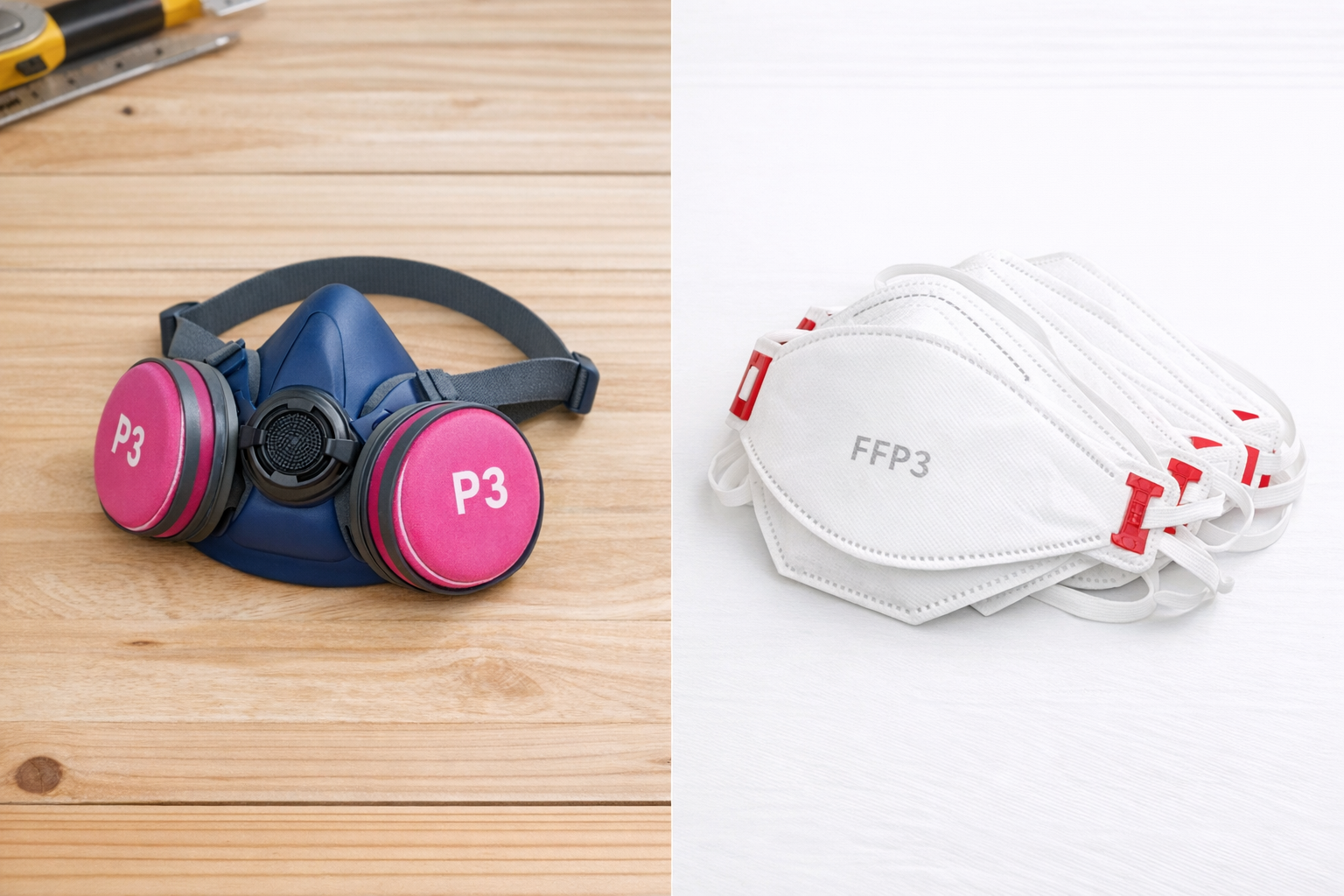
Recommended: 3M Aura 9332+ FFP3 for one-off jobs, or a JSP Force 8 with P3 filters for extended remediation work
Scenario 4: Recurring Mould Work or Confined Spaces
Regular mould cleaning (landlords, maintenance workers). Work in small bathrooms, cupboards, or loft spaces with poor ventilation.
Minimum: Reusable half-mask with P3 filters
Recommended: JSP Force 8 with P3 filters — from around £10-28 for the mask, with replaceable filters. Much more economical for repeated use than disposables.
Our Top Mask Picks for Mould Removal
Best Disposable FFP3: 3M Aura 9332+ (Valved)
The 3M Aura 9332+ is the most popular FFP3 mask in the UK for good reason. The three-panel Aura design fits most face shapes well, the valve reduces heat and moisture build-up during physical work, and at from £0.10/unit from Seton UK (50-pack) it's excellent value. With 19 suppliers competing on price, you can shop around.
Compare all 3M Aura 9332+ prices →
Best Unvalved FFP3: 3M Aura 9330+
If you prefer unvalved (some people find the valve slightly uncomfortable), the 3M Aura 9330+ offers the same FFP3 protection in the same Aura design, just without the exhalation valve. From £0.40/unit from The Face Mask Store (20-pack), across 10 suppliers.
Compare all 3M Aura 9330+ prices →
Best Budget FFP3: Honeywell SuperOne 3207
The Honeywell SuperOne 3207 is one of the cheapest FFP3 masks available in the UK at from £3.00/unit from Toolstation (10-pack). It meets the same EN 149 standard as the 3M Aura — 99% filtration is 99% filtration regardless of brand. A solid budget choice for one-off mould jobs.
Compare Honeywell SuperOne 3207 prices →
Best Medical-Grade: 3M Aura 1863+ (FFP3)
The 3M Aura 1863+ is a medical-rated FFP3 mask, which means it also passes the fluid resistance test (Type IIR). Useful if you're dealing with particularly wet mould and don't want splashback reaching your face. From £0.19/unit from Four Square Healthcare (20-pack), across 6 suppliers.
Compare all 3M Aura 1863+ prices →
Best Reusable: JSP Force 8 with P3 Filters
For recurring mould work, a reusable half-mask is far more economical than disposables. The JSP Force 8 is the UK's most popular reusable respirator, with P3 filters that provide FFP3-equivalent protection. The PressToCheck system lets you verify the seal before each use. From around £10-28 for the mask across 13 suppliers, with replacement filters available separately.
Also Consider: GVS Elipse SPR501 P3
The GVS Elipse SPR501 is a compact reusable half-mask with integrated P3 filters. It's lighter and lower-profile than the JSP Force 8, which some people prefer for longer wear. From around £27-30 across 6 suppliers.
Quick Price Comparison
| Mask | Type | Rating | From (per unit) | Suppliers | Best For |
|---|---|---|---|---|---|
| 3M Aura 9332+ | Disposable | FFP3 | £0.10 | 19 | Most mould jobs |
| 3M Aura 1863+ | Disposable | FFP3 | £0.19 | 6 | Wet mould, splashback |
| 3M Aura 9330+ | Disposable | FFP3 | £0.40 | 10 | Prefer unvalved |
| Oxyline XR 350 | Disposable | FFP3 | £1.25 | 2 | Earloop preference |
| Oxyline X 320 | Reusable | FFP3 | £1.50 | 2 | Reusable disposable |
| 3M Aura 9320+ (FFP2) | Disposable | FFP2 | £1.38 | 14 | Minor surface mould only |
| JSP Force 8 | Reusable | P3 | ~£10-28 | 13 | Recurring mould work |
| GVS Elipse SPR501 | Reusable | P3 | ~£27-30 | 6 | Compact reusable |
Prices updated daily. Click any mask to see all supplier prices and find the cheapest deal.
Full PPE Checklist for Mould Removal
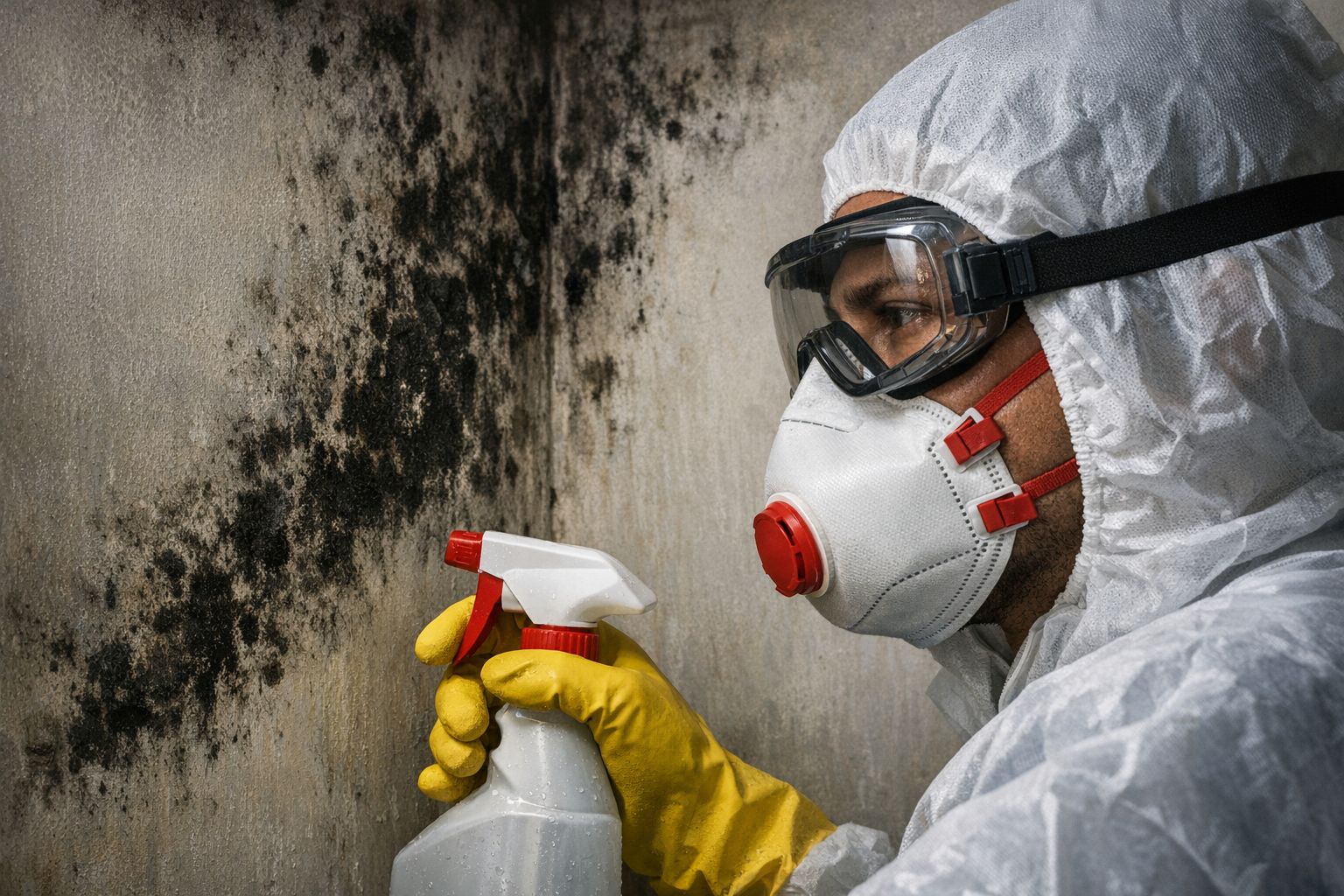
A mask protects your lungs, but mould removal requires more than just respiratory protection. Here's the full kit:
- FFP3 respirator — non-negotiable for anything beyond surface mould
- Sealed safety goggles — not regular glasses or open-sided safety specs. Mould spores irritate eyes and can cause conjunctivitis. Goggles must seal around your eyes.
- Nitrile disposable gloves — protect your hands from both the mould and cleaning chemicals. Nitrile is better than latex for chemical resistance.
- Disposable coveralls — prevents spores settling on your clothes and being carried to other rooms. A cheap Tyvek suit does the job.
- Shoe covers or disposable overshoes — stops you tracking spores through the house
For serious black mould, you should also consider sealing the room with plastic sheeting to prevent spores spreading to the rest of the house during removal.
Practical Mould Removal Tips
This isn't a full cleaning guide, but these are the most important safety points that relate to your mask working properly:
Always Dampen Mould Before Disturbing It
This is the single most important tip. Spray the mould with water or cleaning solution before you touch it. Dry mould releases far more airborne spores when disturbed. Dampening it first dramatically reduces what goes into the air — and what your mask needs to filter.
Never Dry-Brush Mould
Scrubbing dry mould with a brush creates a cloud of spores. Always use a wet cloth or sponge. If you need to scrub, keep the surface damp throughout.
Don't Just Paint Over It
A common mistake. Painting over mould doesn't kill it — the mould grows through the new paint within months. You must remove the mould and address the underlying damp before repainting.
Ventilate the Room
Open windows during and after mould removal. This helps disperse airborne spores outside rather than letting them settle elsewhere in your home. Keep your mask on until the air has cleared — at least 30 minutes after you finish.
Dispose of Materials Properly
Bag up all contaminated materials — cloths, sponges, your disposable mask and gloves — in a sealed plastic bag before removing them from the room. This prevents spreading spores as you carry waste through the house.
Common Mistakes to Avoid
- No mask at all — surprisingly common. People underestimate airborne spore exposure.
- Using a surgical mask — surgical masks don't seal to the face and aren't rated for particle filtration. They offer almost no protection against mould spores.
- Dry brushing mould — creates massive spore clouds. Always dampen first.
- Not ventilating — a sealed room concentrates spores, overwhelming even a good mask faster.
- Buying from unverified sellers — forum users consistently warn about counterfeit masks on marketplace sites. Buy from reputable UK safety suppliers to ensure genuine EN 149-certified products.
Your Rights as a Tenant
If you're renting and your landlord isn't addressing mould, you have legal protections. Awaab's Law (which came into effect in October 2025) requires social landlords to:
- Investigate emergency hazards (including serious mould) within 24 hours
- Begin fixing emergency hazards within 7 days
- Investigate non-emergency damp and mould within 14 days
- Begin repairs within 7 days of investigation
Named after Awaab Ishak, the law reflects how seriously mould is now taken as a health hazard. Private tenants also have protections under the Homes (Fitness for Human Habitation) Act 2018 — your landlord has a legal duty to ensure the property is fit to live in, and serious mould breaches this.
While you wait for repairs, protecting yourself with proper PPE is essential. Don't wait for your landlord to provide equipment — your health comes first.
The Bottom Line
For most mould removal jobs in UK homes, an FFP3 disposable mask like the 3M Aura 9332+ combined with goggles and gloves is the right setup. At from £0.10 per mask, there's no reason to risk your lungs. If you're dealing with mould regularly, investing in a reusable half-mask like the JSP Force 8 will save money in the long run.
We compare mask prices across UK suppliers every day. Use the links above to find the cheapest deal on whichever mask suits your situation.