If you're one of the 16 million people in the UK who suffer from hay fever, you already know the drill: itchy eyes, constant sneezing, blocked nose, and a general sense of misery from May through July. You've probably tried every antihistamine going.
But here's something you might not know: the NHS officially recommends wearing a mask as a way to reduce hay fever symptoms. And the science backs it up — a 2021 exposure chamber study found that wearing a respirator mask completely eliminated nasal and eye symptoms, even at high pollen counts.
Many people stumbled onto this accidentally during COVID. If you noticed your hay fever was mysteriously better in 2020, your mask was almost certainly the reason. The difference now is that you can make a deliberate, informed choice about which mask to use — rather than grabbing whatever was available at the chemist.
We compare respirator prices across UK suppliers every day, so we've put together this guide to help you find the right mask for hay fever season without overpaying.
Why Masks Work for Hay Fever (The Science)
Pollen grains are 10 to 40 microns in diameter. Grass pollen — which affects roughly 95% of UK hay fever sufferers — is around 35 microns. For context, an FFP2 respirator is certified to filter particles down to 0.4 microns. That's nearly 100 times smaller than a grass pollen grain.
In practical terms, this means filtering pollen is trivially easy for any properly rated respirator mask. The challenge isn't filtration — it's getting a good seal around your face so pollen can't sneak in around the edges.
What the Research Says
A 2021 study published in Allergo Journal International (Bergmann et al.) put this to the test. Fourteen adults with confirmed grass pollen allergies spent two hours in a controlled pollen exposure chamber. Some wore no mask, some wore a surgical mask, and some wore an FFP2 respirator.
The result? Both mask types completely eliminated nasal and eye symptoms, even at high pollen levels. Multiple follow-up studies in 2022 and 2023 have confirmed the same finding.
Scientists have also identified a bonus mechanism: masks increase the temperature and humidity of the air you breathe in, which reduces nasal reactivity. So they're working in two ways — physically blocking pollen and calming your nasal passages.
FFP2 Is the Sweet Spot for Hay Fever
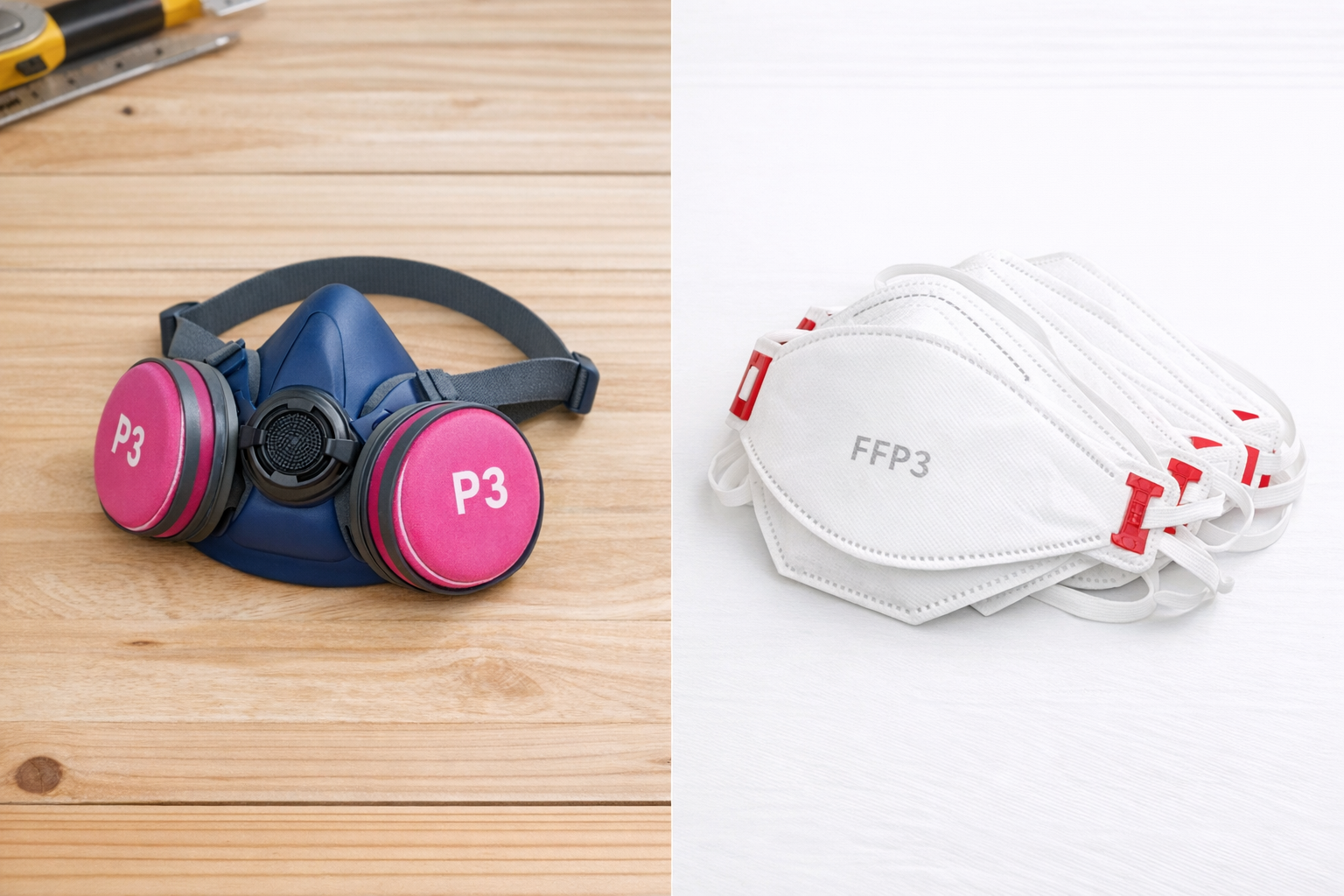
You might assume that higher is better and reach for FFP3. But for pollen protection specifically, FFP2 is the right choice for most people. Here's why:
| Rating | Filtration | Best For | Hay Fever Verdict |
|---|---|---|---|
| FFP1 | 80%+ | Nuisance dust | Too basic — go higher |
| FFP2 | 94%+ | Fine dust, pollen, aerosols | The sweet spot |
| FFP3 | 99%+ | Toxic dust, asbestos | Overkill — harder to breathe through |
FFP2 masks filter 94% of particles at the test size (0.4 microns). Since pollen grains are nearly 100x larger, real-world pollen filtration is effectively 100%. FFP3 adds almost nothing for hay fever, but it is harder to breathe through and costs more.
The exception: if you have asthma that's triggered by pollen, FFP3 may give you extra peace of mind. Asthma + Lung UK notes that pollen can make asthma and COPD worse, so the extra protection margin could be worthwhile.
Valved or Unvalved? Get a Valve.
During COVID, unvalved masks were preferred because they protect other people from your exhaled breath. For hay fever, you're protecting yourself from pollen — so the direction is reversed, and the valve makes no difference to your protection.
What the valve does do is make the mask dramatically more comfortable in warm weather. It lets hot, moist air escape when you exhale, reducing that stuffy, humid feeling inside the mask.
Since hay fever season peaks in May through July — the warmest months — a valved mask is the better choice for comfort. You'll actually wear it if it's comfortable. The best mask is the one you'll keep on.
Our Top Picks for Hay Fever (With Live Prices)
We track prices across 20+ UK suppliers daily. Here are our recommendations for hay fever sufferers, with current best prices.
Best Overall: 3M Aura 9322+ (FFP2, Valved)
The 3M Aura 9322+ is our top pick for hay fever. It's FFP2 rated (more than enough for pollen), has an exhalation valve for summer comfort, and uses 3M's tri-panel Aura design which fits a wide range of face shapes without feeling bulky. The flat-fold design also means it packs into a pocket or bag easily.
From £1.85 per mask — compare prices from 13 suppliers
Best Budget: JSP F621 FFP2 Flat Fold (Unvalved)
If you want maximum pollen protection at the lowest possible price, the JSP F621 is hard to beat. It's FFP2 rated, flat-fold for easy storage, and at just 50p per mask you can use a fresh one every day without thinking twice.
From £0.50 per mask — compare prices
Best Budget FFP2 (Comfortable): 3M VFlex 9152E
The 3M VFlex 9152E combines 3M quality with a V-shaped pleated design that creates more breathing room than a standard flat-fold. It's a great middle ground between the cheapest options and premium models, though stock can be limited — check availability.
Check availability — see current stock
Best for Glasses Wearers: 3M Aura 9320+ (FFP2, Unvalved)
The 3M Aura 9320+ is the unvalved version of our top pick. Its sculpted nose panel and adjustable nose clip create an excellent seal at the top of the mask, which is critical for reducing glasses fogging. Available from 21 suppliers, it's also one of the most widely stocked masks in the UK.
From £1.38 per mask — compare prices from 13 suppliers
Best for Asthma Sufferers: 3M Aura 9332+ (FFP3, Valved)
If your hay fever triggers asthma, stepping up to FFP3 makes sense. The 3M Aura 9332+ offers 99% filtration with a valve for breathability — important when breathing is already compromised. It's also the most widely compared mask on our site, with 30 suppliers competing on price.
From £0.10 per mask — compare prices from 19 suppliers
Best Earloop Style: Oxyline XR 250 (FFP2, Unvalved)
Most FFP2 masks use headband straps, but if you prefer the convenience of ear loops, the Oxyline XR 250 delivers FFP2-rated protection with an ear-loop design. Easier to put on and take off quickly — useful if you're popping in and out of buildings.
From £1.00 per mask — compare prices
Quick Price Comparison
| Mask | Rating | Valve | From (per mask) | Best For |
|---|---|---|---|---|
| JSP F621 | FFP2 | No | £0.50 | Cheapest option |
| 3M VFlex 9152E | FFP2 | No | Check stock | Budget + comfort |
| Oxyline XR 250 | FFP2 | No | £1.00 | Ear loops |
| 3M Aura 9332+ | FFP3 | Yes | £0.10 | Asthma sufferers |
| 3M Aura 9320+ | FFP2 | No | £1.38 | Glasses wearers |
| 3M Aura 9322+ | FFP2 | Yes | £1.85 | Best overall |
Prices updated daily. Click any mask to see all supplier prices and find the cheapest deal.
UK Hay Fever Season: When You'll Need a Mask
The UK pollen season runs roughly from March to September, but it's not one continuous block. Different pollen types peak at different times:
| Pollen Type | Peak Season | % of Sufferers Affected |
|---|---|---|
| Tree pollen (birch, oak) | March – mid-May | ~25% |
| Grass pollen | Mid-May – July | ~95% |
| Weed pollen (dock, nettle) | June – September | Smaller % |
Grass pollen is the big one — it affects 95% of UK hay fever sufferers and peaks during the warmest months. This is exactly why a valved mask matters: you'll be wearing it when temperatures are highest.
It's Getting Worse
According to the Met Office and UK Health Security Agency, climate change is making UK hay fever seasons start earlier, last longer, and become more severe. Grass pollen levels could increase by up to 60% as CO2 levels rise. Hospital admissions for pollen-induced allergic rhinitis have increased over 20 times between 2002 and 2024.
This isn't a problem that's going away. If anything, investing in good pollen protection now makes more sense than ever.
How to Wear a Mask for Hay Fever (It's Not the Same as COVID)
The good news: you don't need to wear a mask every waking moment. Strategic use during high-risk periods makes a huge difference. Here's the practical approach:
When to Wear It
- Gardening and mowing the lawn — the single biggest pollen exposure for most people
- Morning and evening commutes — pollen counts peak in early morning and early evening
- Windy days — wind stirs up pollen and carries it further
- High pollen count days — check the Met Office pollen forecast
- Walking through parks or near fields — obvious, but worth stating
Getting a Good Fit
- Pinch the nose wire first — pre-shape it before putting the mask on, then mould it to your nose once in place
- Check for gaps — run your fingers around the edges. If you feel air leaking, adjust the straps and nose wire
- Breathe in sharply — the mask should pull in slightly toward your face. If it doesn't, air is leaking in somewhere
- If you wear glasses, get the nose wire sealed properly against your cheekbones — this prevents both fogging and pollen sneaking in at the top
Summer Comfort Tips
- Choose a valved mask to let hot air escape
- Keep spare masks in your bag, car, and desk — swap to a fresh one if yours gets damp from sweat
- Drink more water than usual when wearing a mask in warm weather
- Pair with wraparound sunglasses to protect your eyes too — a mask alone won't stop itchy eyes from airborne pollen
Common Mistakes to Avoid
- Buying FFP3 when FFP2 will do — FFP3 is harder to breathe through and costs more. For pollen, FFP2 is scientifically proven to be sufficient.
- Ignoring the fit — a loose FFP3 is worse than a snug FFP2. The seal matters more than the number.
- Using a cloth mask — basic cloth masks don't seal to your face and can't match rated FFP2 filtration. They'll help a bit, but a certified respirator is a different league.
- Wearing the same disposable mask for weeks — in summer heat, disposable masks get damp faster. Replace them more often than you would in winter.
- Only wearing it outdoors — pollen comes indoors through open windows, on your clothes, and on pets. Consider wearing your mask when cleaning or vacuuming on high-count days.
- Going all-or-nothing — you don't have to wear it 24/7. Even just wearing a mask while gardening or commuting on high pollen days can make a noticeable difference.
A Drug-Free Alternative Worth Trying
Many NHS GP practices have stopped prescribing antihistamines for common hay fever, directing patients to buy over-the-counter treatments instead. With the NHS prescription charge at £9.90 per item, a box of cetirizine from the supermarket is the obvious choice for most people.
But masks offer something antihistamines can't: prevention rather than treatment. Antihistamines manage symptoms after pollen has already triggered your immune response. A mask stops the pollen reaching your nose and eyes in the first place.
At prices starting from 50p per mask, it's worth trying alongside your usual treatments. Many people find they can reduce their antihistamine use on days when they wear a mask during peak exposure times.